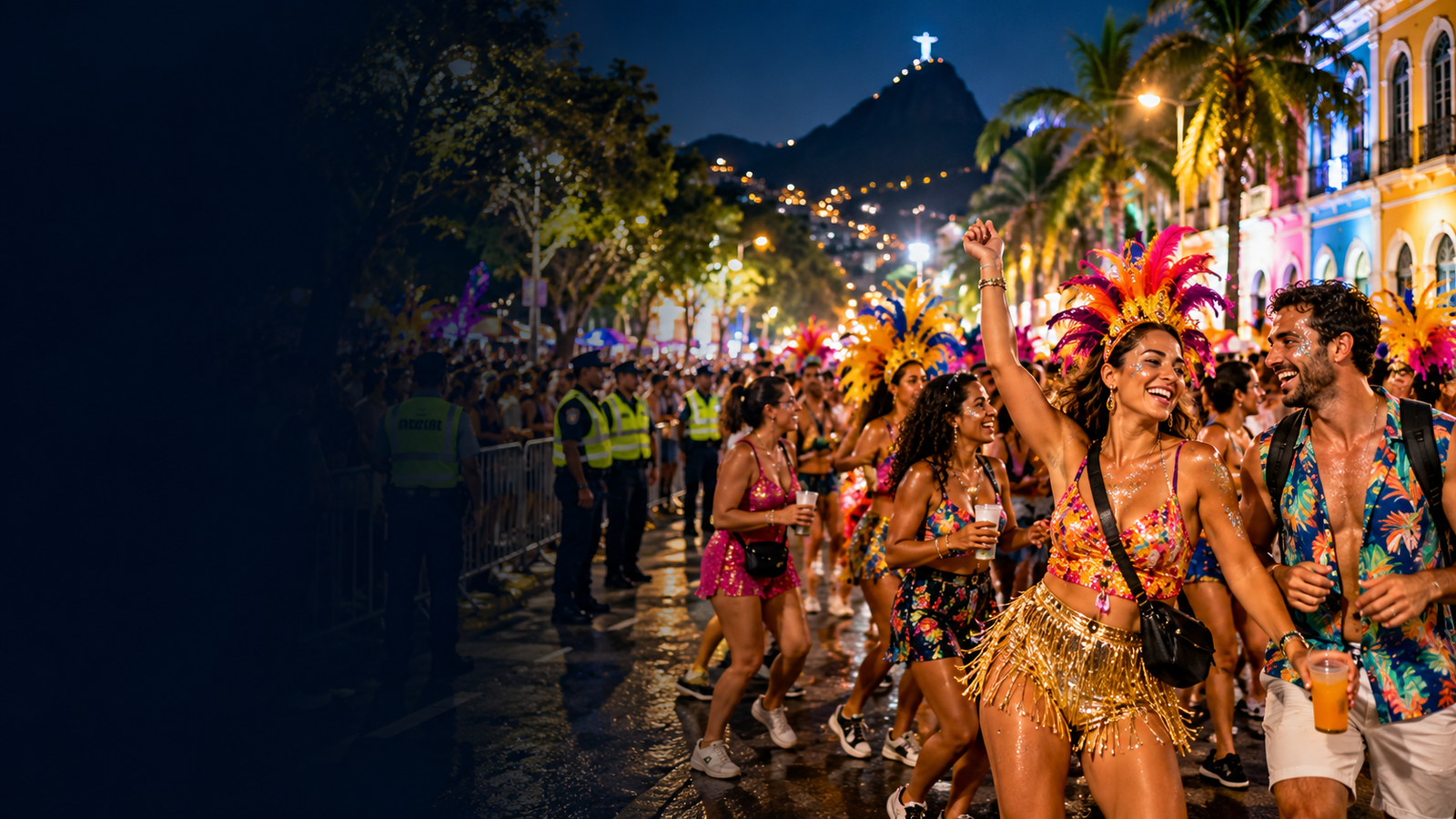
Rio Carnival Visitor Guide · Safety & Practical Advice
Rio Carnival Safety Tips: How to Stay Safer and Enjoy Your Visit
From protecting your phone at a crowded bloco to getting home after a Sambadrome parade, these practical precautions can help you navigate Rio de Janeiro Carnival more confidently.
A Balanced Assessment
Is Rio Carnival Safe for Tourists?
Many international visitors enjoy Rio Carnival without serious problems. But the crowds, late nights and unfamiliar surroundings create opportunities for theft, scams and occasional more serious crime. Sensible planning makes a real difference.
Rio is a large city, and conditions vary considerably between neighbourhoods, individual streets and times of day. The beachfront in the afternoon, a busy Lapa bar at midnight and an unfamiliar road after a parade are not the same environment.
The most useful approach is not to be frightened of Carnival. It is to avoid displaying expensive belongings, plan your journeys, follow local instructions and remain alert where people are moving through dense crowds.
During Carnival, police and event staff may be visible near major gatherings. Their presence can help, but it does not remove the risk of pickpocketing, phone snatching or payment fraud. Your own arrangements still matter.
Carry less, keep your phone secure and know how you will get back to your accommodation. If a place or situation feels wrong, leave rather than trying to complete a planned activity.
Crowded areas
Protect Small Valuables
Mobile phones, wallets and handbags can be targeted in dense crowds, transport queues and public events.
After dark
Plan the Return Journey
Use a suitable metro service, registered taxi or booked vehicle rather than improvising a route through quiet unfamiliar streets.
If confronted
Put Personal Safety First
If someone threatens you with violence or a weapon, do not resist to protect a phone, wallet or camera.
One of the Main Visitor Risks
How to Avoid Phone Theft and Pickpocketing
Your phone may be your camera, map, transport booking device, payment tool and connection to family. Losing it can disrupt the rest of your holiday, particularly if banking and email accounts remain accessible.
Keep Your Phone Out of Sight Between Uses
Avoid walking along the street holding your phone at arm’s length. If you need directions, step into a well-lit business, hotel lobby or another suitable place, check the route and put the phone away.
Be especially careful at the edge of dense crowds, on pavements beside traffic and while getting into or out of vehicles. These are moments when visitors are distracted.
Use a Secure Bag, Not an Open Pocket
A zipped, close-fitting crossbody bag worn in front of the body or a secure waist pouch under clothing is more practical than a loose tote. Keep the phone in a closed compartment rather than an outer pocket.
A tether can reduce accidental dropping, but it is not proof against theft. Do not rely on it while holding a phone openly in a crowded street.
Protect Accounts Before You Travel
Enable a strong device passcode, biometric security where appropriate, remote location and remote-locking features. Keep a separate record of your phone’s identification number, emergency contacts and methods for recovering important accounts.
Consider using a limited-spending payment card or a separate travel device rather than carrying a phone with unrestricted access to every bank account.
Be Careful When Taking Carnival Photographs
It is natural to photograph the costumes and processions. Take a few photographs from a stable position, check what is happening around you and secure the device again. Avoid using an expensive camera or phone continuously in a tightly packed moving bloco.
Understanding Rio’s Geography
Safety in Copacabana, Ipanema, Lapa and Other Areas
A neighbourhood name alone cannot tell you whether an individual street is safe. Consider where you are walking, how busy the area is, the time of day and the route back to your accommodation.
| Area | What visitors should know | Practical precaution |
|---|---|---|
| Copacabana | Busy beachfront, hotels and restaurants attract visitors, particularly during Carnival. | Do not leave possessions unattended on the sand. Avoid isolated beachfront walks late at night. |
| Ipanema | Popular beach and dining area, with large concentrations of visitors at peak times. | Watch phones and bags on the beach, in crowded streets and near late-night gathering points. |
| Lapa | Known for bars, samba venues and nightlife, with conditions changing markedly at night. | Use established venues and plan transport back to your hotel. Avoid wandering into quiet side streets after drinking. |
| Santa Teresa | Hillside streets, cultural attractions and viewpoints; some routes are steep, quiet or poorly suited to unfamiliar night-time walking. | Arrange appropriate transport, particularly after dark. Do not blindly follow shortcuts suggested by navigation applications. |
| Centro | Offices, historic attractions, transport stations and street events create changing foot traffic. | Check the precise route. A lively daytime square can be considerably quieter late at night. |
| Botafogo & Flamengo | Residential, business and hospitality areas with useful transport connections. | Evaluate the immediate streets around your accommodation, especially when arriving late from an event. |
For accommodation decisions, read our Where to Stay During Rio Carnival guide , which compares neighbourhoods according to visitor needs and transport.
Street Parties & Public Celebrations
Staying Safe at Rio Street Carnival and Blocos
Street Carnival is often the most spontaneous part of a Rio visit, but arriving without knowing a bloco’s location, expected size or exit options is unnecessary risk.
Before arriving
Choose the Event Carefully
Confirm the announced gathering point, start time and route. A daytime neighbourhood bloco may be easier for a first-time visitor than a very large procession, especially if you dislike dense crowds.
In the crowd
Avoid Bottlenecks
Do not push against crowd movement to get closer to performers. If you feel compressed or uncomfortable, move gradually towards a safer edge or follow steward instructions.
With companions
Agree on a Meeting Point
Decide what to do if separated. Choose a permanent, recognisable landmark away from the densest part of the procession rather than relying entirely on mobile messaging.
Leaving the event
Expect Road Closures
Do not assume a taxi or app-based vehicle can reach the exact bloco location. Walk towards a suitable transport point using a known, well-used route.
What Should You Carry to a Bloco?
Bring water or a way to buy it, a modest amount of Brazilian currency, an appropriate payment card, essential medication and identification suitable for your outing. A small secure pouch is generally more convenient than a backpack full of valuables.
Wear comfortable shoes with good grip. Open sandals and flip-flops provide less protection from stepped-on feet, broken glass and uneven pavements in very crowded settings.
If the group begins moving into streets you do not recognise, you do not have to follow it. Leaving an event early is a reasonable choice.
See the Rio Street Carnival & Blocos guide for event-planning considerations.
Ticketed Samba Parades
Safety at the Rio Carnival Sambadrome
The Marquês de Sapucaí Sambadrome is a controlled event venue, but the size of the audience and long overnight programme require thoughtful preparation.
Check Your Sector and Entrance
Confirm the correct sector, gate and ticket category before departing. Travelling to the wrong side of the Sambadrome can mean a difficult detour through crowded streets.
Have the required digital ticket or other accepted admission credential ready, and keep identification available when required.
Prepare for an Overnight Event
The programme can continue into the early morning. Eat beforehand, stay hydrated and arrange your return journey before entering.
Do not plan an early flight or demanding excursion immediately after a long parade night if it can be avoided.
Keep Bags and Devices Secure
Follow current restrictions on bags and prohibited items. Keep possessions close rather than leaving them beneath seats or unattended while visiting facilities.
Use your phone carefully in entrances, queues and crowded departure areas.
Follow Venue Instructions
Use the designated entrances, stairways and exits. Keep access routes clear and follow instructions from accredited event staff.
Visitors with mobility requirements should confirm accessible admission, companion arrangements and the correct entry route in advance.
Cash, Cards & Fraud Prevention
Money Safety at Rio Carnival: Reais, Cards and Pix
Paying for food, drinks and transport is straightforward in many tourist areas, but payment-machine tricks and careless cash handling can turn a small purchase into an expensive problem.
How Much Cash Should You Carry?
There is no single correct amount. Carry only enough Brazilian reais for likely small purchases and a modest backup. The appropriate amount depends on the event, your payment options and how long you will be out.
Avoid displaying a large bundle of notes. Separate a small amount for immediate purchases from your main payment card. Leave extra cash and valuables securely stored rather than carrying them to every bloco.
Use Credit and Debit Cards Carefully
Check the amount on the payment terminal before approving the transaction. If the screen is difficult to read, ask the vendor to show it clearly. A common source of disputes involves an incorrect amount being charged.
Keep your card in view, use transaction notifications and avoid allowing somebody to take your card away to process payment. If something looks suspicious, decline the purchase.
What About Pix Payments?
Pix is Brazil’s instant payment system, widely used by businesses and individuals. It commonly works through supported bank and payment applications, including QR-code payments.
International visitors should not assume that possessing a foreign bank account or an ordinary credit card automatically gives them Pix access. Check whether your payment provider supports the system before relying on it. Cards and a modest cash backup may be more practical for some travellers.
Are ATMs Safe to Use?
Prefer an ATM inside a reputable bank branch, shopping centre or another suitably controlled environment. Examine the machine, shield your PIN and avoid accepting help from strangers with your transaction.
Withdraw money before heading into a crowded event rather than looking for an unfamiliar machine late at night.
Before tapping your card or confirming a Pix transaction, verify the amount, currency and recipient information. If the payment fails, check your banking notification before attempting it again.
Recognising Common Problems
Tourist Scams and Situations Worth Avoiding
Unverified Carnival Tickets
Be cautious of messages offering scarce Sambadrome tickets at unusually attractive prices. Screenshots, copied QR codes, informal payment instructions and assurances from anonymous sellers do not demonstrate valid admission.
The announced 2027 ticket categories have their own identification and transfer restrictions. Verify the event and permitted purchasing process before sending money.
Unexpected Charges at Small Purchases
Pay attention when a vendor handles a mobile card terminal. A rushed transaction in a loud crowd is exactly when an incorrect amount can be overlooked.
Unsolicited Help and Distractions
Someone may approach offering to guide you, carry bags or show you a particular attraction. You are under no obligation to accept. If you need assistance, seek it from your accommodation, authorised event staff or a reliable business.
Drinks and Unfamiliar Invitations
Do not leave drinks unattended or accept an open drink from someone you do not know. Avoid following new acquaintances to secluded locations, private accommodation or unfamiliar venues when you have no independent means of returning safely.
Moving Around the City
Using the Rio Metro, Taxis and Ride-Hailing Safely
Rio’s transport network is useful during Carnival, but events and temporary road restrictions can change the most convenient route. Plan both the outward journey and the return.
The metro is often a practical choice for major events when services are operating. Keep bags zipped and phones secure in queues, platforms and packed carriages. Check the applicable Carnival timetable rather than assuming normal hours.
For Uber or another app-based vehicle, verify the registration plate, vehicle and driver details before entering. Use a designated pickup location when available. Do not follow someone claiming to be your driver if their details do not match the booking.
With taxis, use established ranks or recognised booking arrangements. Confirm how the fare will be calculated. Avoid accepting an unsolicited ride from someone approaching you in a crowded departure area.

Advice for Different Travellers
Safety for Solo Travellers, Women and Families
People travel to Rio Carnival in many different ways. The most appropriate precautions depend on your group, comfort with crowds and daily plans, not simply on whether you are visiting alone or with others.
Independent travel
Solo Travellers
Share a basic itinerary with someone you trust and keep accommodation details available offline. Choose a clear meeting or pickup point before attending large events.
For nightlife, stay aware of alcohol consumption, transport and invitations to unfamiliar locations.
Personal security
Women Travellers
Trust your judgement about unwanted attention. You do not need to remain in a venue or conversation that makes you uncomfortable.
Use reliable transport, keep drinks within sight and seek help from venue staff, police or a trusted person if harassment occurs. Brazilian assistance line 180 addresses violence against women.
Travelling together
Families & Children
Prefer manageable daytime events over extremely dense gatherings. Establish a meeting procedure, keep children close and consider identification with a guardian’s contact details.
Provide water, sun protection and breaks. Check age-related Sambadrome admission requirements before buying tickets.
Summer Weather & Wellbeing
Heat, Hydration, Rain and Health During Carnival
Rio Carnival takes place during the Brazilian summer. Heat, humidity, strong sunshine and sudden heavy rain are practical issues, especially when walking or standing for hours.
Stay Hydrated Without Overdoing Alcohol
Drink water regularly and take breaks from direct sun. Alcohol can affect judgement and make it harder to notice fatigue or dehydration. Do not leave drinking water until you already feel unwell.
Recognise Warning Signs
Dizziness, fainting, confusion, unusual weakness and worsening symptoms after heat exposure require attention. Move to a cooler place and seek medical assistance when appropriate. Severe symptoms are an emergency.
Prepare for Heavy Rain
Rio can experience intense summer rainfall. Avoid crossing floodwater, entering flooded tunnels or taking shortcuts through areas affected by landslides. Follow local warnings and delay travel if conditions are unsafe.
Use Sun and Hearing Protection
Sunscreen, a hat and light clothing make daytime street events more comfortable. Percussion and amplified music can be loud, particularly near a bateria. Consider suitable hearing protection, especially for children.
Medication and Travel Insurance
Carry necessary medication in appropriate packaging, with prescriptions or documentation when needed. Make sure your travel insurance covers relevant medical treatment and the activities you plan to undertake.
Save Before You Travel
Rio de Janeiro Emergency Numbers and Tourist Police
In an emergency, identifying your location is often as important as knowing the correct number. Note the street name, nearby landmark or venue entrance when possible.
| Service | Number | When to use it |
|---|---|---|
| Military Police | 190 | Immediate threats, crimes in progress and urgent police help. |
| SAMU Ambulance | 192 | Urgent medical emergencies. |
| Fire & Rescue | 193 | Fires, rescue incidents and relevant emergencies. |
| Civil Defence | 199 | Floods, landslides and other disaster-related risks. |
| Women’s Assistance | 180 | Assistance and guidance relating to violence against women. |
| Rio Tourist Police — DEAT | +55 21 2332-2924 | Specialist police support for incidents involving tourists. Confirm contact details if needed. |
Rio’s specialist tourist police unit is listed at Avenida Afrânio de Melo Franco, 315, Leblon, with 24-hour operation. Its published telephone number is +55 21 2332-2924.
Use 190 for an immediate police emergency. A routine stolen-property report and an active threat are different situations.
What to Do After a Theft or Robbery
Get Somewhere Safe
Leave the immediate situation and seek help from a staffed hotel, police unit, medical facility or another suitable place. If confronted by an armed attacker, do not resist.
Secure Your Money and Accounts
Contact your bank to block cards, freeze compromised payments and report suspicious transactions. Lock a stolen phone remotely and contact your mobile provider.
Report the Incident
Contact the appropriate police service, including tourist police when suitable. Ask about obtaining a police report, known as a boletim de ocorrência, especially for insurance claims.
Contact Your Insurer or Consulate
If your passport is lost or stolen, contact your country’s consular representatives for replacement travel-document advice. Inform your insurer and retain relevant report details.
Ready-to-Use Travel Checklist
Before Leaving Your Hotel for Carnival
A short preparation routine can prevent several avoidable problems. Save this checklist on your phone or review it before heading out.
Three Situations Where You Should Change Your Plan
Leave or reconsider the activity if the crowd becomes dangerously compressed, if your return route no longer seems suitable, or if severe weather or local security warnings affect the area. Missing a party is preferable to ignoring a serious warning sign.
Visitor Questions Answered
Rio Carnival Safety — Frequently Asked Questions
Is Rio Carnival safe for first-time tourists?
Many first-time visitors attend successfully, but precautions are necessary. Protect phones, choose suitable events, avoid unfamiliar isolated routes and plan transport carefully, particularly after dark.
What is the biggest safety concern at Rio Carnival?
Phone theft and pickpocketing are important concerns in crowds and tourist areas. More serious crime can also occur. Keep valuables out of sight and do not resist an armed robbery.
Can I take my phone to a street bloco?
Yes, but keep it in a secure zipped compartment and avoid displaying it continuously. Set up remote-lock and account-recovery options before travelling.
Is Copacabana safe during Carnival?
Copacabana is a major tourist area with hotels, restaurants and busy public spaces, but theft and robbery risks remain. Be cautious on the beach, avoid leaving possessions unattended and do not assume all streets are equally suitable for late-night walking.
Is Lapa safe for nightlife?
Lapa has established nightlife and live music venues, but visitors should choose venues carefully, avoid isolated side streets and arrange reliable transport home. Drink spiking and theft are risks worth taking seriously.
Should I carry my passport at Carnival?
Carry the identification required for your activities and local rules, but avoid bringing unnecessary documents into densely crowded events. Secure your original passport when it is not needed, and keep a digital backup in a protected location. A copy may not be accepted where original identification is required.
Is the Rio Metro safe during Carnival?
The metro is a useful transport option, particularly on major event days. Keep possessions secure in queues, stations and crowded carriages, follow transport staff instructions and verify Carnival operating hours.
Are Uber and taxis safe in Rio de Janeiro?
App-based transport and recognised taxis are practical choices, but verify the vehicle and driver and use suitable pickup points. Do not enter a vehicle whose details differ from your booking.
Can I use Pix as a foreign tourist?
Pix is a Brazilian payment system, but access depends on whether your financial provider supports it. Do not assume every foreign bank or card can make Pix transfers. Arrange other accepted payment methods before travelling.
Is Rio Carnival safe for solo female travellers?
Solo women can enjoy Carnival, but should take sensible precautions around transport, drinks, unwanted attention and personal belongings. Use reliable accommodation and contact event staff or police if harassment or threats occur.
Can families attend Rio Carnival safely?
Families should select suitable daytime activities, avoid overly dense crowds, prepare for heat and establish a clear procedure if separated. Check age-specific admission requirements for ticketed parades.
What should I do if someone steals my phone?
Move to safety, lock the device remotely, contact your bank and mobile provider, and report the theft to police. Do not pursue a thief or travel to an unfamiliar location following the device’s tracking signal.
What are Rio de Janeiro’s emergency numbers?
Dial 190 for police emergencies, 192 for urgent medical assistance, 193 for fire and rescue, and 199 for civil defence incidents. The women’s assistance line is 180. Rio’s tourist police unit is DEAT.
Continue Planning Your Rio Carnival Visit
Explore the Related Rio Carnival Guides
Knowing how to stay safer is one part of preparing for Carnival. These guides help you make practical choices about where to stay, which events to attend and how to organise your time in Rio de Janeiro.